What Do Irish SMEs Actually Want From AI?
We surveyed over a thousand business professionals across Ireland in February 2026 to find out where organisations really stand with AI. Not where vendors say they should be, not where the headlines suggest they are — where they actually are. The results paint a picture that should be useful to anyone trying to make sensible AI decisions this year.
AI Matters, But Confidence Is Low
The first thing that jumps out is that people get it. Over 80% of respondents rated AI as important or very important to their organisation. This is not a technology looking for a problem. The people responsible for running businesses already know that AI will be a factor in how they compete, hire, and deliver.
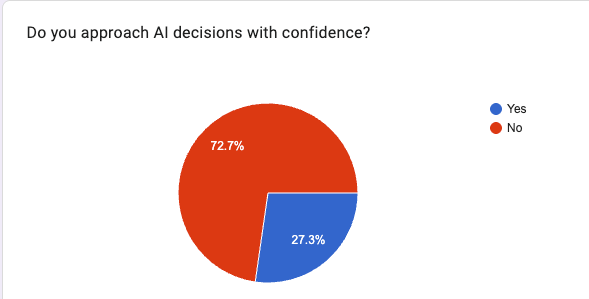
But here is the tension: nearly three quarters of the same respondents said they do not approach AI decisions with confidence. That is a significant gap. People recognise the importance but do not yet feel equipped to act on it. If that sounds familiar, you are not alone — it is arguably the defining characteristic of where most Irish SMEs sit right now.
Everyone Is Experimenting, Few Are Investing
When we asked which tools organisations are using, Claude and ChatGPT came in neck and neck, each used by roughly seven in ten respondents. Claude and Gemini followed at around a quarter each. The spread tells us something important: organisations are not committing to one platform. They are sampling.
That instinct is sound. The AI landscape is shifting fast enough that backing a single vendor today could look shortsighted in six months. One respondent captured this well, noting the challenge of remaining "agnostic to one single tool/vendor" when the rate of change means "some are ahead or behind on any given day."
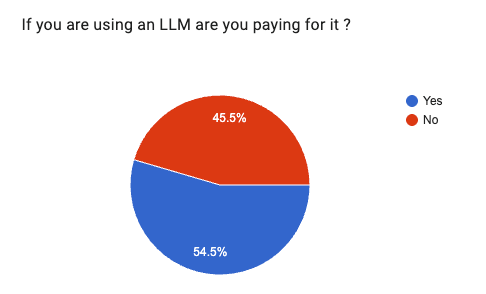
What is more revealing is that over half of respondents are not paying for their AI tools. That suggests most usage is individual and exploratory — people trying things out at their desks rather than organisations rolling out AI as part of a deliberate strategy. There is nothing wrong with experimentation, but it does mean the gap between playing with AI and getting value from AI remains wide for most.
What People Actually Want to Learn
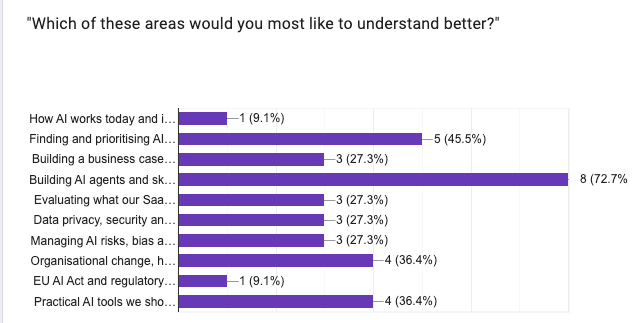
This is where it gets interesting for anyone planning AI initiatives. We asked respondents to pick up to three areas they most wanted to understand better, and the results were clear.
Building AI agents and skills dominated at nearly three quarters of responses. People do not want another slideshow explaining what a large language model is. They want to build something. They want to see how AI applies to their actual workflows, with their actual data, solving their actual problems. A second open-text response reinforced this directly: "We've had plenty of calls talking about AI capabilities but not enough practical demonstrations."
The second most popular choice was finding and prioritising AI opportunities — selected by nearly half of respondents. This makes sense when you pair it with the biggest single barrier people identified: "we don't know where to start." Organisations can see the potential but need a structured way to identify which problems are worth solving with AI first, and which ones are not ready yet.
Practical AI tools and organisational change tied as the third most popular areas, each chosen by over a third of respondents. The tools interest is straightforward — people want to know what is available and what is worth their time. The change management interest is more nuanced and, frankly, more important. It signals that people are thinking beyond the technology itself to the harder question: how do we bring our teams along?
Where the Barriers Are
When forced to pick a single biggest barrier, "lack of internal skills" was the clear leader at over a third of responses. This is a training issue.
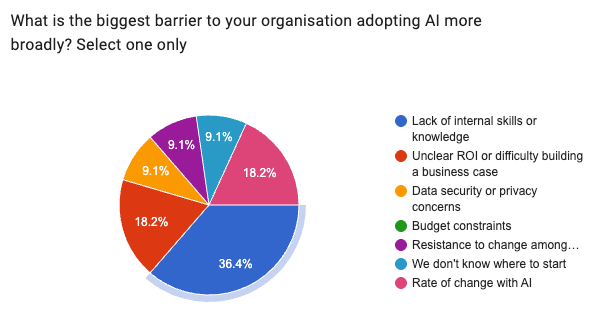
Most organisations have dozens of processes that could theoretically benefit from AI. The difficulty is knowing which ones to tackle first, how to scope them, and how to measure whether the investment paid off.
Budget constraints and lack of internal skills each accounted for roughly one in five responses. Data security concerns and resistance to change were also cited, though less frequently than you might expect given how prominently they feature in vendor marketing.
The relatively low concern about security is worth noting. It does not mean people are ignoring it — 27% did select data privacy as a topic they want to understand better. But it does suggest that for most SMEs, the more immediate challenge is capability, not compliance. They need to know what to do before they worry about the guardrails around doing it.
What Was Not in Demand
Equally telling is what people did not prioritise. "How AI works today and its limitations" was selected by fewer than one in ten. The EU AI Act and regulatory compliance scored similarly low.
This matters for anyone designing AI programmes internally. Your teams are probably past the point of wanting a primer on how transformers work or a walkthrough of regulatory frameworks. They want to get their hands dirty. Theory and compliance have their place, but they should not be the starting point if you want to maintain engagement and momentum.
Vendor Issues
When asked whether they consider a vendor's AI capabilities when sourcing technology solutions, over half said "maybe" and only around a quarter said a definitive yes. AI is becoming a factor in procurement decisions, but it is not yet a dealbreaker for most. That will likely shift over the next twelve months as AI features become more embedded in the SaaS tools organisations already use.
What This Tells Us
The picture that emerges is one of informed uncertainty. Irish SMEs know AI is important. They are experimenting with the tools. But they lack a structured approach to identifying opportunities, building capability, and bringing their organisations along for the journey.
The demand is clearly for practical, hands-on enablement — learning by doing rather than learning by listening. Organisations want to move from browsing AI to actually using it in a way that is measurable and sustainable.
If you are thinking about how to approach this in your own organisation, our AI Enablement for the SME course was designed around exactly these challenges — built for Irish SMEs, focused on practical application, and structured to take teams from experimentation to execution.
If you want a copy of the 10 Questions Summary email enquiries@dayshai.com and we will send it on.